The Ford 8N: A Post-War Farming Icon
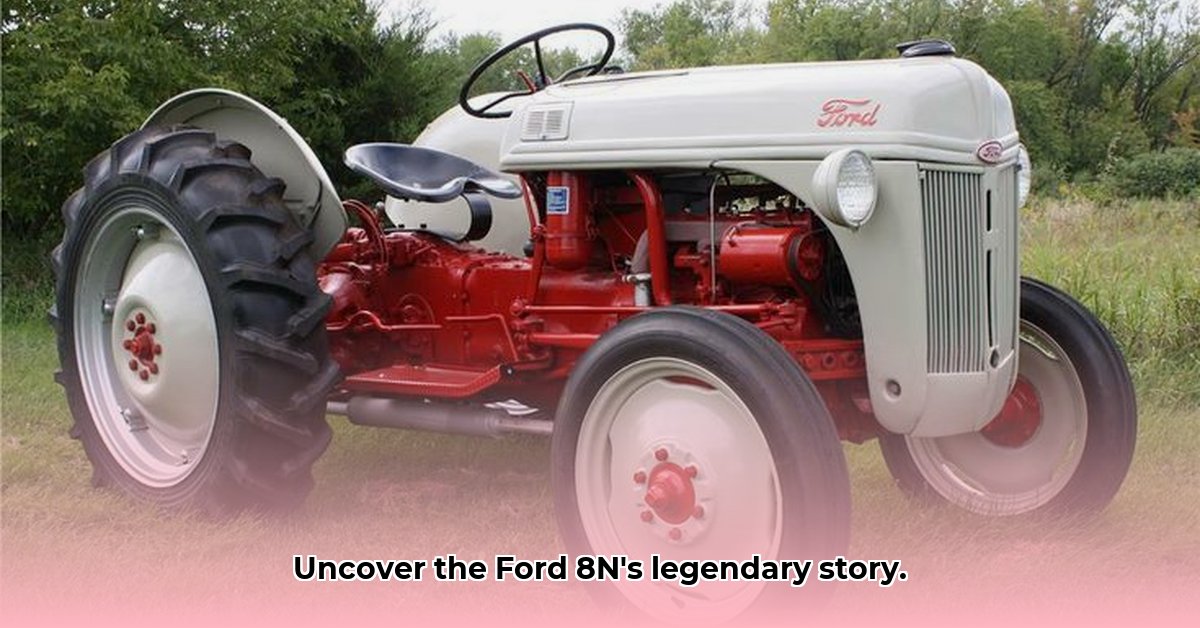
The year is 1947. World War II is over, and American farmers face the monumental task of rebuilding. Enter the Ford 8N tractor—not just another machine, but a symbol of hope and agricultural revolution. Its distinctive curved fenders and iconic design became synonymous with a new era of farming efficiency. More importantly, it was affordable, putting modern mechanization within reach for countless families across the nation. See more images of the 8N here.
This sturdy workhorse wasn't merely a tool; it was a transformative force. Over half a million 8Ns rolled off the assembly line by 1952, fundamentally reshaping agricultural practices. Farmers could till fields faster, plant with greater precision, and harvest with unprecedented ease. It wasn't simply about increased speed; it was about liberation from backbreaking labor, leading to higher yields and a brighter future. Isn't it fascinating how a single machine could impact an entire industry so profoundly?
Under the Hood: A Look at the 8N's Mechanics
The Ford 8N, despite its relatively modest size, packed a punch. Its four-cylinder gasoline engine (some models ran on distillate fuel) delivered 18-20 horsepower—ample power for most farming tasks of the time. This wasn't a delicate machine; it was built tough, designed to withstand the rigors of daily farm life. What truly set the 8N apart, however, was its innovative three-point hitch system.
This ingenious design allowed farmers to quickly attach and detach various implements, dramatically improving the tractor's versatility. Imagine the time saved compared to earlier models! Switching from plowing to mowing became a simple matter of minutes, not hours. This feature alone propelled the 8N to dominance within the industry.
Here's a summary of its key specifications:
| Specification | Details |
|---|---|
| Engine | 4-cylinder, gasoline or distillate fuel |
| Horsepower | 18-20 hp |
| Transmission | 3-speed sliding gear, optional high-low gear |
| Three-Point Hitch | Yes |
| Weight (approximate) | 2410-2717 lbs (varied based on fluids/ballast) |
It's important to note that the weight could fluctuate depending on fluid levels and added ballast. This variation should always be considered when comparing different 8N specifications.
Restoring an 8N: A Labor of Love (and Patience)
Today, the Ford 8N enjoys a devoted following among collectors. These aren't just old tractors; they are tangible links to a bygone era, embodying the spirit of ingenuity and hard work. The satisfaction of restoring one to its former glory is immense—a rewarding challenge that tests both mechanical aptitude and patience.
However, restoring an 8N is not a weekend project. It's a journey that requires dedication and perseverance. Sourcing replacement parts can be a quest in itself, necessitating online searches, visits to parts suppliers, attendance at swap meets, and networking with other enthusiasts. How many hours, on average, do you think a meticulous restoration project would take?
Here's a typical restoration process:
- Assessment: Thoroughly inspect the tractor, documenting its condition with photographs and detailed notes.
- Disassembly: Carefully dismantle the tractor, meticulously documenting each step.
- Deep Clean: Clean every component to assess the extent of needed repairs or replacements.
- Repair and Replace: Repair repairable parts and source high-quality replacement parts.
- Reassembly: Reassemble the tractor, following your detailed documentation.
- Testing and Fine-tuning: Test all functions and fine-tune for optimal performance.
The 8N in the Collector's Market: Value and Considerations
The value of a restored 8N varies considerably, depending on factors like originality, condition, and rarity. A fully restored, original 8N in pristine condition commands a significantly higher price than one needing considerable work. Online forums, collector shows, and specialized publications offer valuable resources for gauging current market values. Networking with fellow enthusiasts is also incredibly valuable. What are some key factors that influence the market value of a vintage tractor like the Ford 8N?
How to Compare Ford 8N Tractor Performance to Competitors
The Ford 8N’s legacy is undeniable. But how does its performance compare to competitors and later models? Understanding its strengths and limitations is crucial for both collectors and those considering using one for practical work.
Understanding the 8N's Strengths
The 8N’s simplicity is its defining characteristic. Its three-speed transmission, while seemingly limited compared to later models, contributes to its robust design and ease of maintenance. Many mechanics still prefer its straightforward mechanics for ease of troubleshooting and repair. This simplicity was particularly valuable in a time of limited skilled labor and readily accessible resources. Furthermore, the availability of parts for the 8N remains a significant advantage.
Comparing the 8N to its Successors: The Ford 860 and Others
The Ford 860 provides a notable contrast. It's like the 8N's more powerful, technologically advanced cousin. It boasts a more powerful engine, a five-speed transmission, and improved hydraulics. But, this comes at a cost; increased complexity makes maintenance more challenging and repair costs potentially higher. Fuel consumption is also generally greater.
To compare the 8N to its competitors (John Deere, Massey Ferguson, etc.), consider these factors:
- Power and Performance: Horsepower, transmission type, PTO system, hydraulics.
- Maintenance and Repair: Simplicity of design, parts availability, repair costs.
- Operational Costs: Fuel consumption.
- Intended Use: Task intensity.
This structured approach will help determine which tractor best suits your needs and budget.
A Legacy of Efficiency and Enduring Appeal
The Ford 8N is more than a collection of parts; it represents a pivotal era in agricultural history. Its enduring appeal to collectors stems from its ingenuity, simplicity, and lasting impact on American farming. It stands as a testament to the influence of simple design and affordability on transforming an industry and shaping society. The 8N’s story is a powerful reminder of the impact of innovation on the world around us.